

Home Solar Battery Installation – What You Should Know
Home Solar Battery Installation – What You Should Know
Installing a home battery system requires mounting the battery unit either on a wall or floor surface and connecting it to an inverter system. The inverter's primary function is to transform the battery's DC (Direct Current) power into AC (Alternating Current) power, which is ideally suitable for household use. The inverter setup typically follows one of two configurations:- An integrated 'battery inverter' that comes as part of the battery package
- A pre-installed 'hybrid inverter' that's already connected to your solar array and ready for battery integration
- AS5139:2019 covering battery system specifications
- AS4777.2:2020 relating to grid-connected inverter systems
- AS5033:2021 for solar array installations (in most cases)
- AS4509:2009 regarding standalone power configurations (where applicable)
Restricted Locations
Installation locations must be according to the manufacturer's instructions to protect batteries against environmental factors, such as violent storms, excessive heat, direct sunlight, and fluctuating temperatures, which may affect the system's efficiency or lifespan. Each battery type has its own temperature criteria under which it is best to maintain system performance and stay safe.
Queensland's climate requires particular consideration. For example, northern parts become quite warm, while from a battery storage perspective, north- and west-facing installation sites may not be appropriate because of severe solar exposure.
Battery system installations are prohibited in these areas:
1. Habitable spaces, as specified by the National Construction Code (NCC) and defined in AS5139:2019 section 1.3.42, including but not limited to:
2. Bedroom
3. Living Room
4. Lounge Room
5. Music Room
6. Television Room
7. Kitchen
8. Dining Room
9. Sewing Room
10. Study
11. Playroom
12. Family Room
13. Home Theatre
14. Sunroom
15. Egress paths
16. Frequently occupied or long-term use areas
Appropriate installation locations, subject to meeting all guideline requirements, may include:
1. Garages
2. Basement
3. Battery Rooms
4. Verandas
Clearance
In the battery installation, the following minimum clearance requirements shall apply:
The greater of the manufacturer’s minimum clearance requirements and AS5139 standards, 600 mm lateral and 900 mm vertical, must be maintained.
Residential Barrier
Lithium-ion battery systems are the most widely used rechargeable batteries in home energy storage setups. Regardless of the battery chemistry, they are prone to thermal runaway and battery fires. Some manufacturers include built-in fire suppression systems, such as Hinen, to drastically reduce such risks.
Two of the most common foundation types for battery installation tend to be concrete slabs, which, being non-combustible by nature, require no further fire protection treatment. Several materials are deemed to comply, and no further protective measures are required for installations using those materials. Where clearances of walls to habitable rooms cannot be achieved as specified in AS5139, a non-combustible barrier must be used in accordance with AS5139 4.2.4.2 or 5.2.4.2.
Below are examples showing wall types and the clearances needed for habitable rooms:
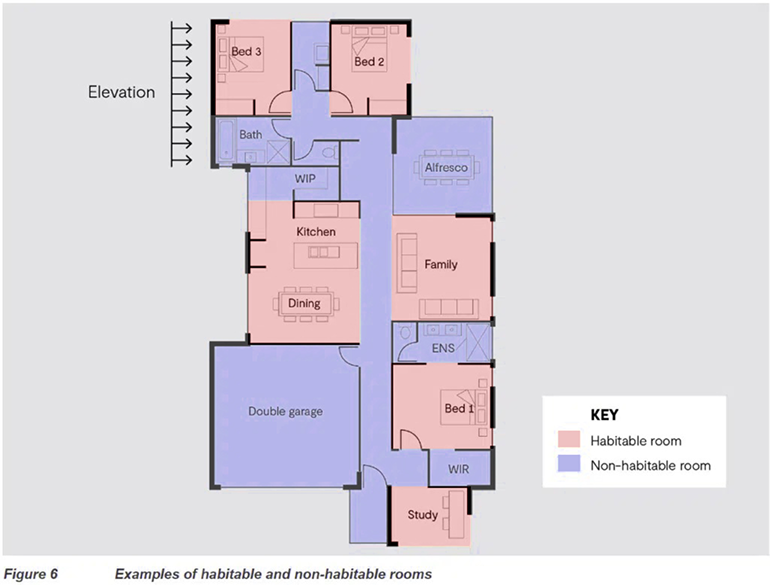
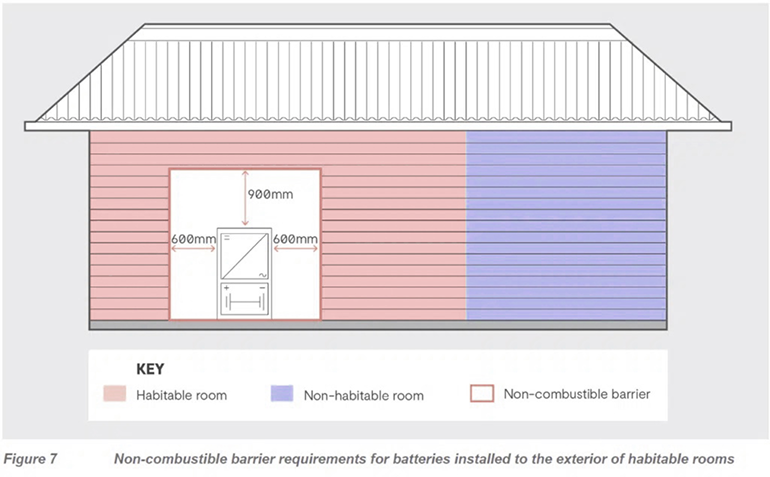
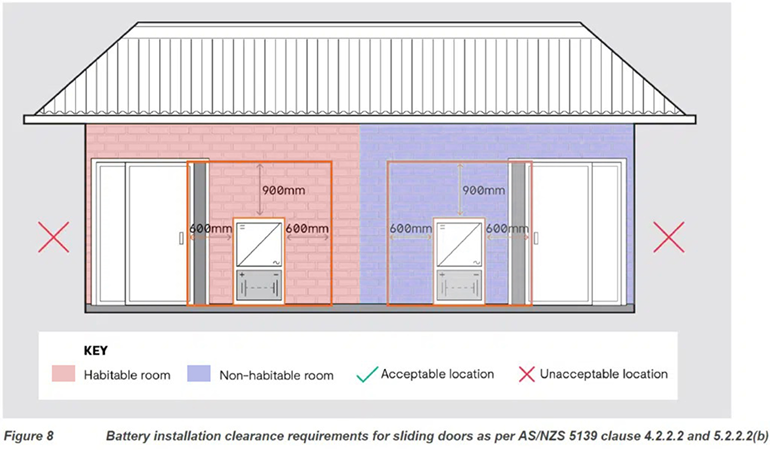
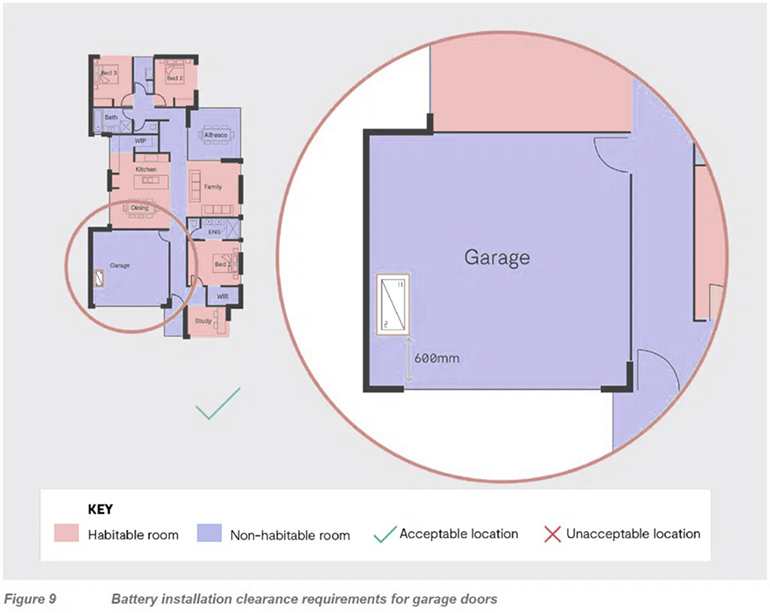
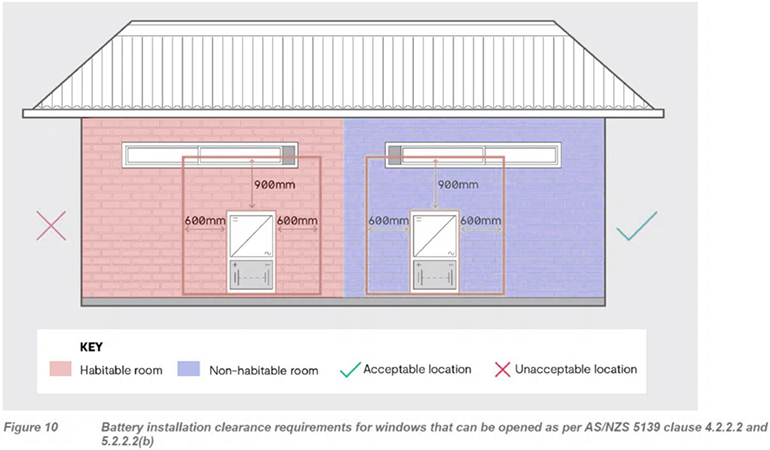
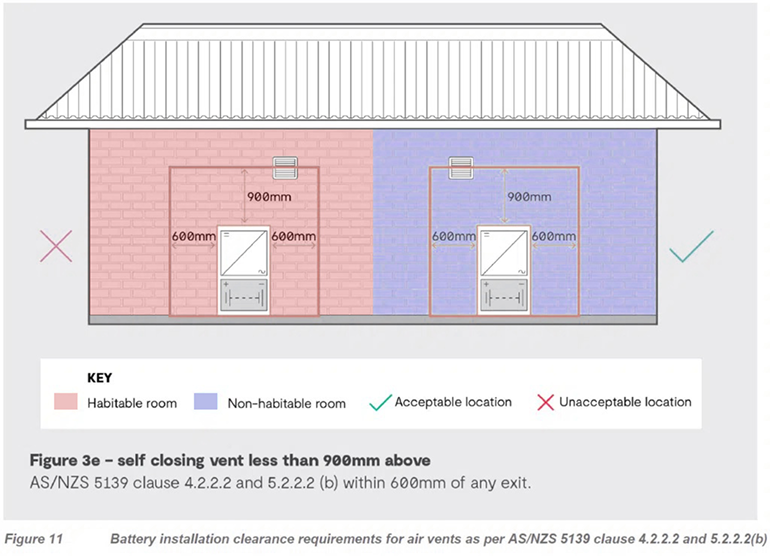
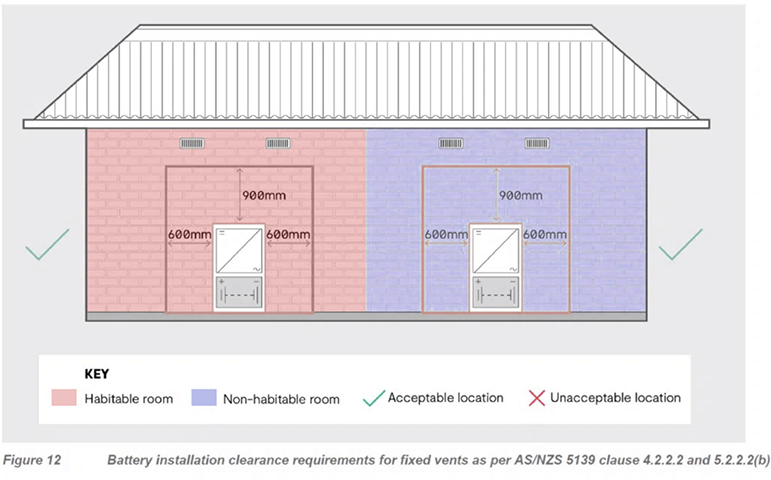 Doorways and escape routes must be at least 600 mm away from battery installations. When the battery system is 300mm away from the separating wall from the habitable space, no additional protection is needed.
Mechanical Protection
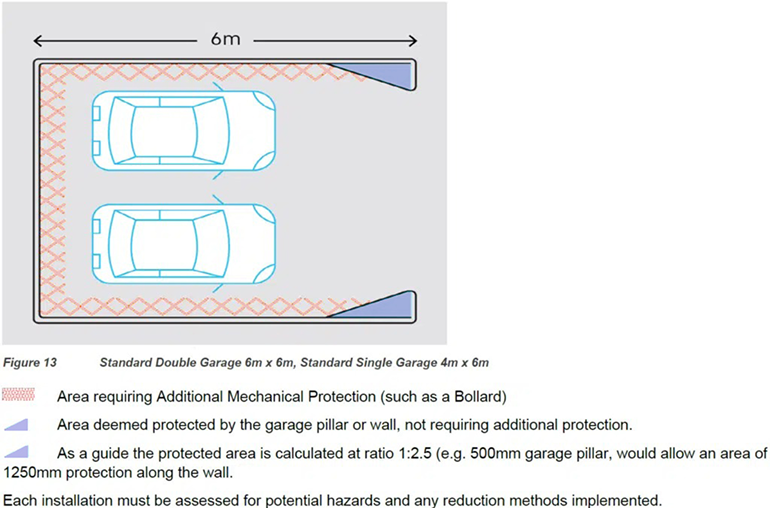
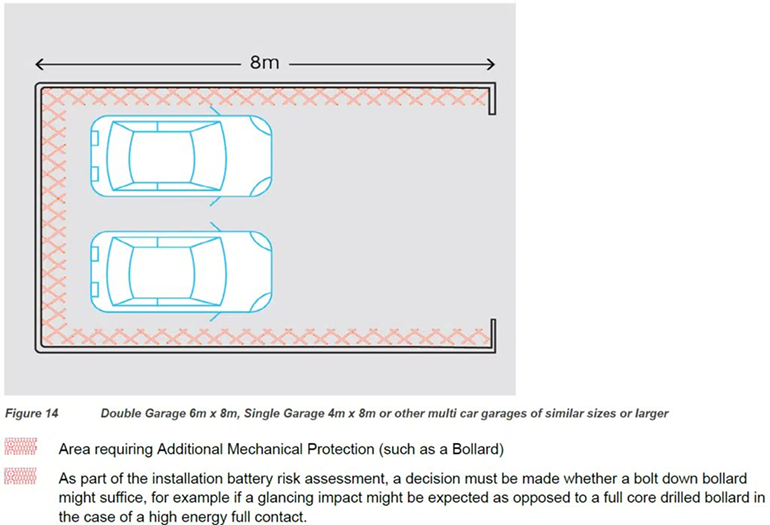
In Queensland and throughout the rest of Australia, many domestic battery systems are set up in garages, which may require advanced mechanical safeguards. Such protection is needed when there is a reasonable possibility of vehicular impact damaging the battery system or its enclosure.
Many manufacturers do claim their battery enclosures are sufficiently impact-resistant and do not need further mechanical protection, although AS/NZS 3000 1.5.14 plainly states requirements for protection measures against outside forces. Appendix H offers further details for satisfying the requirements of mechanical protection based on impact severity.
Moreover, clause 1.7.1 (c) mandates that electrical equipment installation must comply with both the standard's requirements and any additional manufacturer-specified guidelines. As a result, the requirements of AS/NZS 3000 Wiring Rules apply.
For wall-mounted batteries, installations with impact potential from vehicles on the back or sides shall be provided with additional mechanical protection, such as bollards. This will be the case for all wall-mounted battery systems where there is a risk of vehicle impact.
Request A Free Quote
Simply leave your details below and we'll get back to you as soon as possible.
Testimonials